Does the ADA Apply to Private Homes? What the Rules Actually Cover
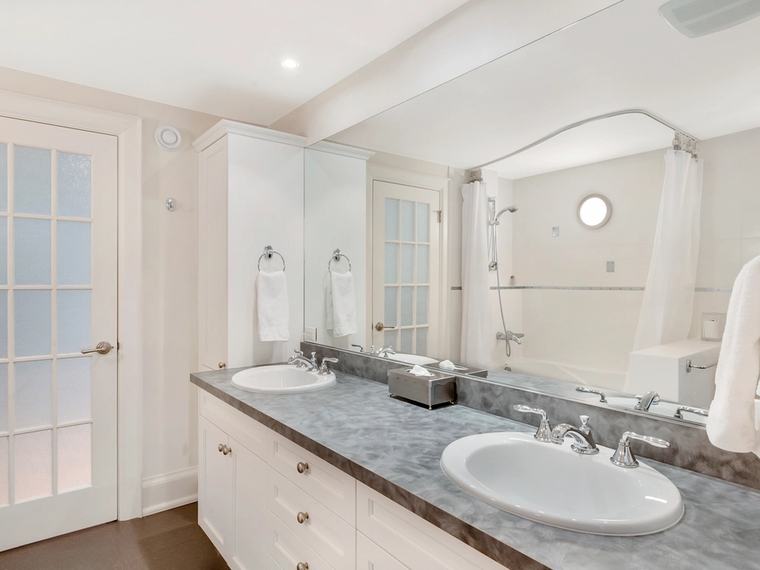
No. The ADA does not apply to a private home you live in. You can install any toilet at any height, put grab bars wherever you like, and ignore every dimension in the standards. Nobody will inspect it and nothing requires it.
That surprises people, and it is only two-thirds of the answer. Three other situations do carry legal obligations — renting out property, running a business from home, and certain new multi-family construction — and the ADA standards remain the best design reference available even where nothing compels you to follow them.
⚡ Where the lines fall
Your own home: no ADA obligation at all. Build for the body that lives there.
Renting out a property: the Fair Housing Act may apply, not the ADA.
A business open to the public in your home: that part is covered by the ADA.
New multi-family buildings: the FHA design requirements apply.
What the ADA actually covers 📖
The Americans with Disabilities Act is a civil rights law about access to public life. It is organized into titles, and none of them reaches into a private residence.
| Title | Covers | Your bathroom? |
|---|---|---|
| Title I | Employment | No |
| Title II | State and local government programs and facilities | No |
| Title III | Places of public accommodation — shops, restaurants, hotels, offices open to the public | Only if the public comes in |
| Title IV | Telecommunications | No |
| Title V | Miscellaneous provisions | No |
Title III is the one that governs bathrooms, and it applies to places of public accommodation. A house where a family lives is not one. Neither is an apartment someone rents as their home — the dwelling itself is private space, even in a building with common areas that are covered.
Why your home is outside it 🏠
The reasoning is straightforward once stated. The ADA exists so that disabled people can participate in public life — work, shop, travel, use government services. A private home is not a place the public has any right to enter, so requiring it to accommodate the public would serve no purpose.
Practically, that means nobody is going to inspect your bathroom, no permit will be refused for a non-compliant toilet height, and no fine exists for a grab bar at 31 inches. This is genuinely liberating, and it is the point most people miss when they get anxious about doing it “properly”.
The standards were written for buildings that must serve strangers. Your bathroom serves people you can measure. That is a better position to design from, not a worse one.
The Fair Housing Act — the one that catches landlords 🏢
This is where people go wrong, because they check whether the ADA applies, find it does not, and stop — when a different law does.
The Fair Housing Act governs housing, and it works quite differently from the ADA. It does not usually require you to build to a specification. It requires you not to discriminate, and it creates two specific duties.
| Duty | What it means | Who pays |
|---|---|---|
| Reasonable modification | Allow a tenant to make physical changes — grab bars, a ramp, a raised toilet | Usually the tenant |
| Reasonable accommodation | Adjust a rule or policy — a service animal despite a no-pets rule, a closer parking space | The landlord |
| Design and construction | New multi-family buildings of four or more units, first occupied after March 1991, must meet accessible design requirements | The builder |
The first row is the one that matters to most people. A landlord generally cannot refuse a tenant permission to fit grab bars at the tenant’s own expense, provided the request is reasonable — and grab bars are close to the textbook example of reasonable. The landlord may require that the work be done properly and that the property be restored at the end of the tenancy where restoration is reasonable.
Put the request in writing, describe the need, offer to pay for professional installation and to make good on leaving. A refusal to a reasonable modification request may be a Fair Housing issue rather than simply the landlord’s preference.
Your local fair housing agency or HUD can advise, and the conversation frequently changes once the request is in writing.
Running a business from home 💼
Here the ADA can reach into a home, but only into part of it. If a portion of a residence is a place of public accommodation — clients come to it — that portion may fall under Title III.
- Covered: the part used by the public. A home office clients visit, a treatment room, a studio open to customers, and the route to reach it.
- Not covered: the private living areas — your own bedroom, your family bathroom.
- The gray area: a bathroom used by both clients and family, which is common in home businesses and is worth taking advice on.
- Short-term rentals occupy contested ground and the answer can depend on how the property is operated and on local law.
The practical test is whether members of the public are invited in as customers. A consultant who works from a spare room and never meets clients there is not running a public accommodation. A therapist who sees clients at home is in a different position.
If you rent and want modifications 🔑
- Ask in writing. Email is fine. A written request creates a record and is treated more seriously than a conversation.
- Describe the need, not the diagnosis. “I need support to stand safely at the toilet” is enough; you do not owe a landlord your medical history.
- Be specific about the work. What, where, and who will do it.
- Offer to pay and to use a qualified installer. That removes most reasonable objections.
- Address restoration. Offer to remove the bars and make good at the end of the tenancy — though note that a landlord cannot always insist on this where restoration would be unreasonable.
- Keep the correspondence. If it goes wrong, this is what a fair housing agency will want to see.
- Consider the no-drill options in the meantime — a toilet safety frame or a floor-to-ceiling pole needs no permission at all.
Freestanding Toilet Safety Frame
Support on both sides, load goes to the floor, no holes in anyone’s wall.
Where drilling is not an option — a rental, a landlord still deciding, a wall that will not take a fastener — a frame that stands on the floor is genuinely safe rather than a compromise. It gives arms on both sides, which is often what was actually needed, and it can be removed in seconds when the tenancy ends. Look for a stated weight capacity with real margin, adjustable height and width, and rubber feet that grip.
- Support
- Both sides
- Height
- Adjustable
- Capacity
- 300 lb typical
- Fitting
- No drilling at all
- No permission needed from a landlord or anyone else
- Load reaches the floor — unlike a suction bar, which is not fall protection
- Arms on both sides, often better than a single wall bar
- May be covered as durable medical equipment — ask before buying
🔩 Avoid suction bars as a rental workaround — they release without warning and are not fall protection. As an Amazon Associate we may earn from qualifying purchases at no extra cost to you.
Building codes still apply 📐
The ADA not applying does not mean nothing applies. Local building codes govern residential work, and they are a separate matter entirely.
- Permits are commonly required for moving plumbing or electrical, structural changes, and widening openings.
- Plumbing and electrical codes apply to the work regardless of who it is for.
- Clearances around fixtures are specified in residential codes, and those figures are not the same as the ADA’s.
- Waterproofing and drainage standards apply to any shower work.
- Some jurisdictions have visitability ordinances requiring a level entrance and a usable ground-floor bathroom in new homes.
- HOA rules may govern anything visible from outside, such as a ramp.
None of this stops you fitting a grab bar. It matters when the work gets bigger — a tub-to-shower conversion, a widened doorway, a relocated toilet. Ask your contractor to confirm permit requirements and include them in the quote.
Where the standards are still worth using ✅
Free of any obligation, the ADA figures remain the best-researched starting points available. They were derived from real anthropometric data about what people can reach, grip and transfer onto.
| Figure | Use it at home? | Why |
|---|---|---|
| 250 lbf grab bar rating | Always | Physics does not care whose house it is |
| 1.5 in clearance behind a bar | Always | A trapped forearm is dangerous anywhere |
| 1.25–2 in bar diameter | Always | Grip mechanics are universal |
| 17–19 in seat height | As a starting point | Then let the foot test decide |
| 33–36 in bar height | As a starting point | Then let the reach test decide |
| Blocking in walls | Yes | Costs nothing during work; priceless later |
| 60 in turning circle | Only for a wheelchair | Otherwise it wastes scarce space |
| 16–18 in toilet centerline | Only for transfers | Irrelevant if nobody transfers sideways |
The first three rows are not really about accessibility law at all — they are engineering and ergonomics. A bar that pulls out of the wall does so regardless of the building it is in, and no home exemption changes that.
Where you should ignore them 🚫
- Seat height, if the person is short or tall. The band was set for a general population. Fit the body in front of you, and let the foot test overrule the number.
- Grab bar height, if their hand goes somewhere else. Watch where they reach and fit there, even at 31 inches.
- Turning space, if nobody uses a wheelchair. Sixty inches of clear floor in a small bathroom costs you storage and a basin for no benefit.
- Toilet centerline, if there are no lateral transfers. Position it where the person can reach the support they need.
- Bar length, if the wall is shorter. A 24-inch bar in the right place beats no bar because a 42-inch one would not fit.
- Ambulatory stall dimensions, which are a commercial-restroom concept with no home equivalent.
Anything load-bearing. The 250 lbf rating, the 1.5 inch wall clearance, and fixing into structure rather than drywall anchors are not accessibility preferences — they are what stops the bar coming off the wall.
Adjust the ergonomics freely. Do not adjust the engineering.
“ADA compliant” in product listings 🏷️
You will see the phrase constantly on toilets, grab bars and shower seats. Understand what it can and cannot mean.
- A product cannot be ADA compliant on its own. Compliance is a property of an installed space, not an item in a box.
- On a toilet, it generally means the seat height falls in the 17 to 19 inch band. That is one requirement out of about a dozen.
- On a grab bar, it usually means the diameter and rating meet the specification — which is genuinely useful information.
- It says nothing about your room — clearances, door width, dispenser position, transfer space.
- It is not verified by anyone. No authority certifies these claims before they appear on a listing.
So treat it as a useful hint about one dimension, not as a guarantee. Find the actual number in the specification — and if you are at home, remember that the number matters less than whether it fits the person.
Common mistakes (with fixes) 🔍
Sixty inches of turning space in a small bathroom that no wheelchair will ever enter, at the cost of storage and a decent basin.
The fix: use the standards where they encode ergonomics, ignore them where they encode public-building requirements.
Landlords conclude that because the ADA does not apply, no obligation exists — when the Fair Housing Act creates real duties.
The fix: if you rent property out, read the FHA’s reasonable modification and accommodation rules.
Tenants give up on grab bars after a verbal no, when a reasonable modification request is generally protected.
The fix: put it in writing, offer to pay and to make good. Contact a fair housing agency if it is still refused.
A toilet cannot make a room compliant; it can only meet one dimension of one requirement.
The fix: find the seat height figure in the specification and check it against the person who will use it.
“The ADA does not apply here” becomes a reason to skip the 250 lbf rating or fix into drywall anchors.
The fix: adjust heights and positions freely; never adjust the structural requirements.
The ADA not applying is taken to mean no rules apply, and a shower conversion goes ahead without a permit.
The fix: ask the contractor to confirm permit requirements for the scope of work and include them in the quote.
Pro tips 💡
- Design for the person, then sanity-check against the standard. That order gives you the benefit of the research without its constraints.
- Keep the load requirements even when you drop the dimensions. 250 lbf and 1.5 inches of clearance are physics.
- If you might sell, build to the standard where it is free. Blocking in walls and a wider door cost little and add to the pool of future buyers.
- Landlords: allow the modification and document it. It is usually required, it costs you nothing, and a bar that stays adds value.
- Tenants: try the no-drill options while you wait. A frame or a pole needs nobody’s permission.
- Ask about local visitability ordinances if you are building new — some jurisdictions have them and they are easy to meet at design stage.
- Take advice if you run a business from home. The line between public and private space is genuinely fact-specific.
What this looks like in real life 🏡
“We built it to code and she still could not use it”
Every dimension taken from the standards: 18-inch seat, bars at 34 inches, sixty inches of clear floor. She is 5 ft 1 in with no wheelchair. Her feet did not reach the floor, the bars were above where her hand went, and the clear floor had cost them the storage they needed. Compliant, and wrong for the only person using it.
“The landlord said no, then said yes”
A verbal refusal over the phone. The tenant sent a written request describing the need, offering to pay for professional installation and to make good on leaving. The answer came back yes within a week — the first no had been reflex rather than policy.
“The ADA didn’t apply, so we skipped the rating too”
A decorative bar, no stated load rating, fitted into drywall anchors on the reasoning that the standards were for public buildings. It came away from the wall taking a section of board with it. The exemption was from the dimensions, not from physics.
Frequently asked questions ❓
Does the ADA apply to private homes?
No. The Americans with Disabilities Act governs employment, government facilities and places of public accommodation — shops, restaurants, hotels and similar. A private residence is none of those, so there is no obligation to meet any ADA dimension in your own bathroom, no inspection and no penalty. Different laws may apply if you rent the property out or run a business from it.
Do ADA rules apply to rental properties?
Not the ADA, but the Fair Housing Act does. It requires landlords to allow reasonable modifications — grab bars, ramps, a raised toilet — usually at the tenant’s expense, and to make reasonable accommodations in rules and policies. New multi-family buildings of four or more units first occupied after March 1991 also have to meet accessible design requirements. Refusing a reasonable grab bar request may well be a Fair Housing issue.
Can my landlord refuse to let me install grab bars?
Generally not, if the request is reasonable — and grab bars are close to the textbook example. Under the Fair Housing Act a landlord must permit reasonable modifications, usually at the tenant’s expense, though they can require the work be done properly and that the property be restored at the end of the tenancy where that is reasonable. Put the request in writing, offer to pay for professional installation, and contact a fair housing agency or HUD if it is still refused.
Should I follow ADA standards in my own bathroom anyway?
Partly. Keep everything structural — the 250 lbf grab bar rating, the 1.5 inch clearance behind the bar, the 1.25 to 2 inch diameter — because those are engineering rather than accessibility law. Treat the heights as starting points and let the person’s own reach and the foot test decide. Ignore the space requirements like the 60 inch turning circle unless a wheelchair is actually involved, since they consume space you may need for other things.
Does the ADA apply if I run a business from home?
It can, but only to the part the public uses. If clients visit a home office, a treatment room or a studio, that portion may be a place of public accommodation under Title III, along with the route to reach it — while your private living areas remain outside it. A bathroom shared between clients and family is a genuine gray area worth taking advice on, as are short-term rentals.
Do I need a permit for accessibility work at home?
It depends on the scope, and this is local building code rather than the ADA. Grab bars, raised toilet seats and shower seats generally need no permit. Anything that moves plumbing or electrical, changes structure or widens an opening usually does — which covers most tub-to-shower conversions and every layout change. Ask your contractor to confirm for your jurisdiction and include permit costs in the quote.
Checklist ✅
Working out what applies to you
- Established whether the home is owner-occupied, rented, or partly business
- If renting out: Fair Housing Act duties read
- If renting: modification request made in writing
- If a business: took advice on which areas are public
- Local building code and permit requirements checked
- Any local visitability ordinance checked, if building new
- HOA rules checked for anything visible outside
- Load requirements kept — 250 lbf, 1.5 in clearance, 1.25–2 in diameter
- Anchoring into structure, not drywall anchors
- Heights set by the person’s reach, not the standard
- Foot test used for seat height
- Space requirements applied only if a wheelchair is involved
- Blocking added to walls while any are open
- “ADA compliant” product claims verified against actual specs
- No-drill options considered where permission is an obstacle
The bottom line
The ADA does not apply to the home you live in. No inspection, no permit refusal, no penalty — you can fit the bathroom to the body that uses it, which is a better brief than the one public buildings work to.
Three things still bind. If you rent property out, the Fair Housing Act does apply, and refusing a reasonable grab bar request is a real risk. Building codes apply to anything beyond simple fittings. And the load requirements are not accessibility law at all — 250 lbf, 1.5 inches of clearance, fixed into structure. Adjust the ergonomics as much as the person needs. Do not adjust the physics.
Keep reading: What Makes a Toilet ADA Compliant · ADA Grab Bar Height · Grab Bars for Renters · Handicap Toilet Height Explained · Aging in Place Bathroom Planning · ADA Bathroom Requirements Checklist
General information about US law as of 2026, not legal advice. Fair Housing Act duties, building codes and local ordinances vary and are fact-specific — consult a fair housing agency, HUD, or an attorney about your own situation.