Grab Bar Sizes: What Length and Diameter to Buy for Each Position
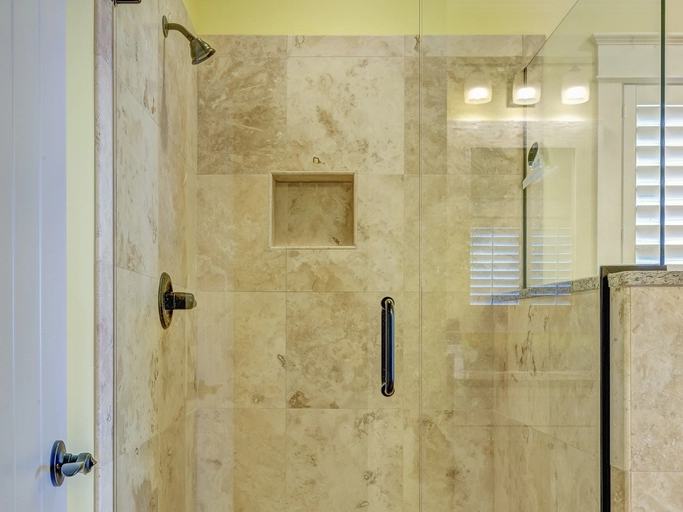
Two numbers decide whether a grab bar works: how long it is, and how thick it is. Length is chosen by the position. Diameter is chosen by the hand — and that is the one almost nobody thinks about.
Get either wrong and you can have a bar fitted at the perfect height, into solid structure, that the person still cannot use properly.
⚡ The quick answer
Beside the toilet: 24–42 in horizontal. Longer is better if the wall allows.
Shower or tub entry: 18–24 in vertical.
Diameter: 1.25–1.5 in for most hands; go thinner for weak grip, never thicker.
The rule: buy longer than feels necessary. A long bar forgives a hand landing badly.
Length by position 📏
| Position | Length | Orientation | Notes |
|---|---|---|---|
| Beside the toilet | 24–42 in | Horizontal | 42 in where a standard applies; 24 in is fine at home |
| Behind the toilet | 36 in | Horizontal | Secondary to the side bar |
| Shower / tub entry | 18–24 in | Vertical | The hand slides as the body moves |
| Inside the shower | 24–36 in | Horizontal | Longer suits a moving hand while washing |
| Above a shower seat | 24–36 in | Horizontal | Never directly above a fold-down seat |
| Tub back wall | 24–36 in | Horizontal | Two bars at different heights beat one |
| Beside the sink | 18–24 in | Horizontal | Short runs of wall are common here |
| Stair landing | 18–24 in | Vertical | Spans the hand transition on and off the rail |
| Outdoor step | 18–24 in | Vertical or angled | Outdoor-rated finish |
| Very short wall | 12–16 in | Either | Last resort — one grip position only |
Notice how few positions genuinely call for a short bar. 12 and 16 inch bars exist for walls that cannot take anything longer, not because a short bar is ever preferable — and a lot of households buy them by default because they look less intrusive.
Why longer is usually better 📐
This is the single most useful sizing principle, and it follows from how a bar actually gets used in the moment that matters.
- A long bar forgives a bad hand landing. When balance goes, the hand does not arrive where it was aiming. A 32-inch bar catches a hand that a 12-inch bar would have missed entirely.
- It gives multiple grip positions for different movements — one place to steady while turning, another to push down on while rising.
- It suits more than one person. A tall adult and a short adult naturally grip at different points along the same bar.
- It is more likely to reach two studs, which makes anchoring easier rather than harder.
- The price difference is small. A 32-inch bar rarely costs much more than a 16-inch one, and installation cost is identical.
The only real arguments for a short bar are a short wall and appearance. Neither of those is worth much when a hand arrives six inches from where it was aiming.
Diameter, and the hand ✋
Length is about the position. Diameter is about the person — and it is decided by grip strength and hand size rather than by anything on the wall.
| Diameter | Suits | Watch for |
|---|---|---|
| 1.25 in | Weak grip, arthritis, small hands | The most forgiving size for a compromised hand |
| 1.5 in | Most adults; the common default | Good all-round choice |
| 1.5–2 in | Large hands, strong grip | Upper limit of the permitted range |
| Over 2 in | Nobody | Fingers cannot close around it |
| Under 1.25 in | Not recommended | Too thin to press against; cuts into the palm |
| Non-circular | Permitted if grip is equivalent | Check the perimeter measurement |
The counter-intuitive part: a thicker bar is not a stronger grip. A hand that cannot close fully around a 2-inch tube is relying on friction alone, while the same hand can wrap properly around a 1.25-inch one. For arthritis, weak grip or small hands, go thinner rather than thicker.
Have them grip something roughly 1.25 inches across — a broom handle is close — and something nearer 2 inches, like a thick cardboard tube.
Whichever they can wrap their fingers around properly is the diameter to buy. It costs nothing to check and it is the difference between a bar that helps and one that is merely present.
The 1.5 inch gap 🔩
Not a size of the bar, but a dimension you are buying when you choose one: the space between the bar and the wall must be 1.5 inches. Most bars build this into their flange depth, but not all do.
| Gap | What happens |
|---|---|
| Under 1.5 in | Fingers cannot get behind the bar to wrap around it |
| 1.5 in | Correct |
| Over 1.5 in | A falling forearm can slide in and jam between bar and wall |
This is one of very few dimensions in accessible design that is dangerous in both directions, which is why it is specified as an exact figure rather than a minimum. If a bar’s flanges do not produce 1.5 inches, shim them.
24-Inch Grab Bar, 1.25–1.5 Inch Diameter
Long enough to forgive a bad hand landing, thin enough for a weak grip.
If you buy one size and use it in several places, this is it. Twenty-four inches gives multiple grip positions and a real chance of reaching two studs, while a 1.25 to 1.5 inch diameter suits the widest range of hands — including arthritic ones, which struggle with anything thicker. Check the flange depth gives 1.5 inches of clearance from the wall, and choose a textured finish rather than polished chrome.
- Length
- 24 in
- Diameter
- 1.25–1.5 in
- Wall clearance
- 1.5 in exactly
- Rated
- 250 lbf, any direction
- Long enough to catch a hand that arrives off-target
- Thin enough to wrap fingers around with a compromised grip
- More likely to reach two studs than a short bar
- Buy two while ordering — the call-out is most of the install cost
🔩 Measure the usable wall before ordering — the bar has to fit between obstructions, not just on the wall. As an Amazon Associate we may earn from qualifying purchases at no extra cost to you.
When the wall limits you 🧱
Frequently the wall, not the person, decides the length. That is a real constraint but it should be the last one applied, not the first.
- Measure the usable run, not the wall — from obstruction to obstruction. A door frame, a tank, a sink or a corner all reduce it.
- A shorter bar in the right place beats no bar because the ideal length would not fit. Fit the 24 if the 42 will not go.
- Consider a mounting plate where the length is fine but the studs are wrong. It lets a bar sit anywhere along the plate.
- Consider a different orientation. A short wall may not take a 32-inch horizontal bar but will happily take a 24-inch vertical one.
- Consider a different type. Where there is genuinely no usable wall, a flip-up bar or a floor-standing frame solves what no length can.
- Do not shorten the reach to suit the stud. Position first, anchoring second — with a plate or blocking if needed.
Size and weight capacity ⚖️
- Length does not change the rating. A compliant bar is rated 250 lbf in any direction whether it is 12 inches or 48.
- But length changes the leverage. Force applied at the middle of a long bar produces more bending than the same force near a flange.
- Which is why longer bars need both flanges anchored properly — a long bar with one good fixing and one poor one is worse than a short bar with two good ones.
- Bariatric bars use heavier tube and larger flanges rather than different lengths. Choose one well before the standard rating is reached.
- Wall thickness matters more than bar thickness. The tube almost never fails; the anchoring does.
What the standards specify 📖
| Element | Requirement |
|---|---|
| Toilet side wall bar | 42 in minimum, starting max 12 in from the rear wall, reaching min 54 in from it |
| Toilet rear wall bar | 36 in minimum, 12 in one side and 24 in the other of the centerline |
| Ambulatory compartment | 42 in on both side walls |
| Diameter | 1.25–2 in, or equivalent grip if non-circular |
| Wall clearance | 1.5 in exactly |
| Clearance above | 12 in minimum |
| Strength | 250 lbf at any point, any direction |
| Shower bars | Stop 6 in short of adjacent walls |
These bind public buildings, not homes. But two of them are worth keeping anywhere: the 1.25 to 2 inch diameter range and the 1.5 inch wall clearance are ergonomics and safety, not accessibility law — the hand works the same way in any building.
Measuring before you order 📋
- Mark the position first with tape, based on where their hand actually goes — not on where a bar would fit neatly.
- Measure the usable run from obstruction to obstruction at that height. Door frames, corners, cisterns and sinks all count.
- Subtract a little at each end so the bar is not jammed against something. A couple of inches of breathing room each side.
- Choose the longest bar that fits that run, from the standard sizes: 12, 16, 18, 24, 32, 36, 42, 48.
- Check the diameter against the hand using the broom-handle test.
- Confirm the flange depth gives 1.5 inches of clearance, or plan to shim.
- Locate the studs and decide whether the chosen length reaches two — and if not, order a mounting plate at the same time.
The standard sizes you can actually buy 🛒
Grab bars come in a fixed set of lengths, and knowing them saves ordering something that does not exist. Almost every manufacturer offers 12, 16, 18, 24, 32, 36, 42 and 48 inches, measured flange to flange rather than tube length.
- 24 and 36 inches are the most widely stocked, so they are easiest to source quickly and usually cheapest.
- 42 inch bars are common because that is the ADA side-wall requirement, even though few homes need the full length.
- Odd sizes exist but often at a premium and with longer lead times — rarely worth it over choosing the next size down.
- Measure flange to flange when comparing, since some listings quote the tube and some the overall fitting.
- Two shorter bars can beat one long one where an obstruction sits in the middle of a run.
Common mistakes (with fixes) 🔍
A 12 or 16 inch bar gives one grip position, and a hand that arrives off-target misses it entirely.
The fix: buy the longest bar the usable wall allows. The price and install cost are nearly identical.
Thicker feels sturdier and is harder to grip — a hand that cannot close around it is relying on friction alone.
The fix: 1.25 inches for arthritis, weak grip or small hands. Test with a broom handle first.
The wall is 40 inches but a door frame and a tank reduce the clear run to 26, and the 36-inch bar does not fit.
The fix: measure obstruction to obstruction at the actual mounting height.
Too tight and fingers cannot get behind the bar; too loose and a forearm can jam between bar and wall.
The fix: confirm the flange gives 1.5 inches, and shim if it does not.
The framing ends up dictating the position, so the bar sits where the studs are rather than where the hand goes.
The fix: keep the position and solve the anchoring — a mounting plate or blocking lets the bar go anywhere.
People buy short thinking it will be stronger. The rating is the same; what changes is that both flanges must be properly anchored.
The fix: buy long and anchor both ends into structure.
Pro tips 💡
- Do the broom-handle test before ordering. Two minutes, and it settles the diameter properly.
- Buy 24 inch as your default if you are buying several — it fits most positions and suits most hands.
- Measure at the mounting height, not at eye level. Obstructions differ.
- Order a mounting plate alongside if the studs look awkward. It costs little and saves a second trip.
- Keep the diameter consistent around the house so the grip feels the same everywhere.
- Longer beats angled in most cases — a long straight bar covers the same hand travel with easier anchoring.
- Write the sizes down so a replacement or a second bathroom matches.
What this looks like in real life 🏡
“The 12-inch bar was too small to find”
Chosen because it looked discreet beside the toilet. When she slipped, her hand came down about eight inches from where the bar was and found nothing. A 32-inch bar in the same position, at the same height, would have been under her hand — and cost about twelve dollars more.
“He couldn’t grip the thick one”
A chunky 2-inch bar, bought because it felt substantial in the shop. With advanced arthritis he could not close his fingers around it and was pressing on it rather than holding it. A 1.25-inch replacement he could actually wrap a hand around changed what he could do with it.
“The wall was 40 inches and the bar was 36”
Measured wall to wall and ordered accordingly. At the mounting height a door architrave and the tank reduced the clear run to 28 inches. The bar went back and a 24-inch one went up — and it fitted, but the trip could have been avoided by measuring at the right height.
Frequently asked questions ❓
What size grab bar do I need?
For beside the toilet, 24 to 42 inches horizontal — longer if the wall allows. For a shower or tub entry, 18 to 24 inches vertical. Inside the shower, 24 to 36 inches horizontal. Diameter should be 1.25 to 1.5 inches for most people. If you are buying one size for several positions, a 24-inch bar at 1.25 to 1.5 inch diameter fits the widest range of situations.
Is a longer grab bar better?
Usually, yes. A long bar catches a hand that arrives off-target, which is exactly what happens when balance goes — a 32-inch bar covers ground a 12-inch bar does not. It also gives multiple grip positions, suits people of different heights, and is more likely to reach two studs. The price and installation cost are near identical, so the only real reasons to go short are a short wall or appearance.
What diameter should a grab bar be?
1.25 to 1.5 inches suits most adults, and the permitted range runs to 2 inches. Counter-intuitively, thinner is better for a compromised hand: someone with arthritis or weak grip can wrap their fingers properly around a 1.25 inch tube but only presses against a 2 inch one. Test it by having them grip a broom handle versus a thick cardboard tube, and buy whichever they can close a hand around.
How far from the wall should a grab bar be?
Exactly 1.5 inches, and this one is dangerous in both directions. Too tight and fingers cannot get behind the bar to wrap around it; too loose and a falling forearm can slide into the gap and jam between the bar and the wall. Most bars build this into their flange depth — if yours does not, shim it rather than accepting the gap you get.
What if the wall is too short for the bar I want?
Measure the usable run from obstruction to obstruction at the actual mounting height, since door frames, corners, cisterns and sinks all reduce it. Then fit the longest bar that run allows — a 24 inch bar in the right place beats no bar because a 42 would not fit. If the wall genuinely cannot take a useful length, a flip-up bar or a floor-standing frame solves what no length can.
Does a longer grab bar hold less weight?
No — a compliant bar is rated to 250 lbf in any direction regardless of length. What changes is leverage: force applied in the middle of a long bar produces more bending than the same force near a flange, so both ends need proper anchoring into studs, blocking or masonry. A long bar with two solid fixings is stronger in practice than a short one with a single good fixing.
Sizing checklist ✅
Before you order
- Position marked with tape where their hand actually goes
- Usable run measured obstruction to obstruction
- Measured at the actual mounting height, not eye level
- Breathing room allowed at each end
- Longest bar chosen that fits the run
- Broom-handle test done for diameter
- 1.25 in chosen for weak grip or arthritis
- Diameter kept consistent across the house
- Flange depth gives 1.5 in wall clearance, or shims planned
- 12 in clearance above the bar confirmed
- Studs located; mounting plate ordered if needed
- 250 lbf rating stated, any direction
- Textured finish, contrasting color
- Vertical orientation considered where a short wall limits horizontal
- Sizes written down for future reference
The bottom line
Two numbers, decided by two different things. Length is chosen by the position, and longer is almost always better — because a hand that has lost its footing does not arrive where it was aiming, and a long bar is what catches it.
Diameter is chosen by the hand, and thinner beats thicker for a compromised grip. Test it with a broom handle before ordering. And confirm the bar sits exactly 1.5 inches off the wall — one of the very few dimensions in this whole subject that is dangerous if you go either way.
Keep reading: Types of Bathroom Grab Bars · Grab Bar Height by Location · ADA Grab Bar Height · Grab Bars for the Elderly · How to Install a Grab Bar That Will Hold · Best Grab Bars for the Toilet
ADA figures are from the 2010 Standards for Accessible Design and apply to covered facilities, not private homes. General information, not medical or construction advice.