Grab Bars for the Elderly: Where to Put Them and Which to Buy
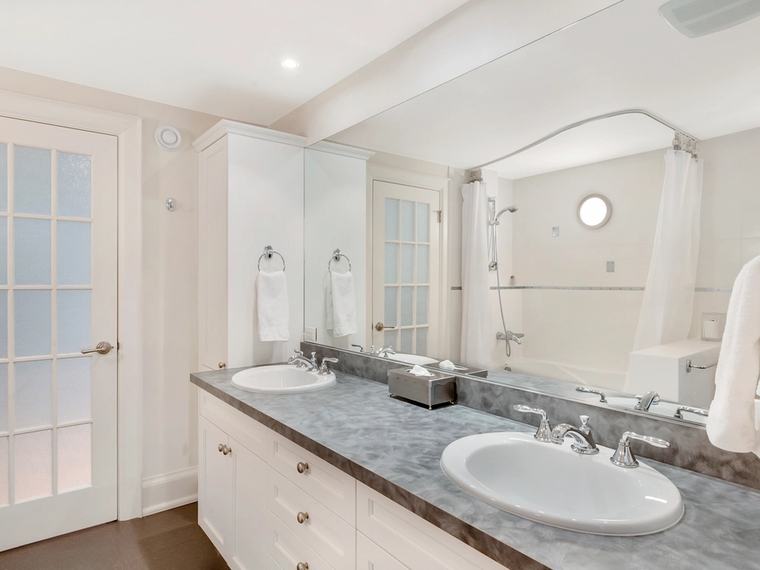
Most advice on grab bars for older adults skips the two questions that decide whether they get used: how many, and where. Buy one bar and put it where it looked sensible, and you have furniture. Buy the right three and put them where the hands already reach, and you have removed most of the risk in the house.
This guide covers the whole home, not just beside the toilet — because the second most common place an older adult reaches for support is the top of the stairs, and almost nobody fits a bar there.
⚡ Where to start
Watch, don’t guess. Follow the person around the house for a day and notice what they grab. Whatever they reach for is where a bar belongs.
Three bars solve most homes: beside the toilet, at the shower or tub entry, and inside the bathing area.
The wall matters more than the bar. A $60 bar in a stud beats a $200 bar in drywall anchors, every time.
Find the positions by watching 👀
This is the single most useful thing in the article and it costs nothing. Spend a day noticing what an older person actually holds onto as they move around.
- The towel rail when standing up from the toilet.
- The sink when steadying at the sink — a fixture almost never fixed to take it.
- The shower door or screen when stepping in or out.
- The door frame at the top of the stairs.
- The back of a chair when rising from a sofa.
- The radiator or windowsill in a hallway, mid-walk.
Every one of those is a grab bar position that does not have a grab bar in it. People do not stop needing support because there is nothing safe to hold — they just hold something unsafe instead.
Both are mounted to look solid and neither is designed to take a falling adult. A towel rail pulling out of drywall turns a stumble into a fall with debris; a sink coming off the wall is worse.
Fitting a real bar does not just add support — it gives the hand something correct to reach for.
Where bars go, room by room 🏠
| Location | Priority | Type and length | What it prevents |
|---|---|---|---|
| Beside the toilet | 1st | Horizontal, 24–42 in, 33–36 in high | The most repeated risky movement in the house |
| Shower or tub entry | 2nd | Vertical, 18–24 in, at the threshold | Stepping over a rim on one wet foot |
| Inside the shower | 3rd | Horizontal or angled, 24–36 in | Losing balance while washing |
| Beside the sink | 4th | Horizontal, 18–24 in | Leaning on a sink not fixed to take it |
| Top of the stairs | 4th | Vertical, at the newel or door frame | The highest-consequence fall in the house |
| Beside the bed | 5th | Bed rail or floor-to-ceiling pole | Night transfers on tired legs |
| Entry step / porch | 5th | Vertical or angled, outdoor-rated | Ice, wet leaves, uneven thresholds |
Rows one to three are where most households should stop. Those three positions cover the two movements that account for most bathroom falls — rising from the toilet and crossing a tub rim — plus the long unsupported stand of a shower.
Horizontal, vertical or angled?
- Horizontal for pushing down on — standing up from a seat. This is the toilet bar.
- Vertical for pulling up on and for steadying while stepping — entries and thresholds.
- Angled where the hand travels as the body rises, such as beside a tub. A compromise, and often the most comfortable inside a shower.
The types, and who each suits 🔩
| Type | Best for | Watch for |
|---|---|---|
| Straight wall-mounted | Almost every position | Needs studs or blocking |
| Flip-up (folding) | Where a wall bar would block a route | All leverage lands on one plate |
| Angled / diagonal | Tub and shower entries | Harder to hit two studs |
| Floor-to-ceiling pole | Beside a bed or chair; no fixable wall | Needs a solid ceiling above |
| Toilet safety frame | Renting; no wall beside the toilet | Occupies floor permanently |
| Textured / knurled finish | Wet hands, weak grip | Slightly harder to clean |
| Decorative “designer” bars | Resistance to the idea | Verify the load rating, not just the look |
| Suction bars | Nothing load-bearing | Release without warning — see below |
24-Inch Wall-Mounted Grab Bar
Beside the toilet, horizontal, 33–36 inches from the floor — the highest-value bar in the house.
Standing up from the toilet is the most repeated risky movement an older adult makes, several times a day, every day. A horizontal bar on the wall beside it is the single change that removes the most risk per dollar. Look for a 1.25 to 1.5 inch diameter, a knurled or textured finish for wet hands, and a stated 250 lbf rating.
- Orientation
- Horizontal
- Height
- 33–36 in to the top
- Diameter
- 1.25–1.5 in
- Rated
- 250 lbf
- Targets the most frequent risk in the whole house
- Gives the hand something correct to reach for instead of the towel rail
- Textured finishes hold grip when hands are wet or weak
- Fix into studs or blocking — the rating assumes it
🔩 Buy two while you are ordering — a second bar later means a second visit and a second set of holes. As an Amazon Associate we may earn from qualifying purchases at no extra cost to you.
What to look for when buying 📋
- 250 lbf rating, stated. If a listing does not give a figure, treat it as decorative.
- 1.25 to 1.5 inch diameter. Thinner and a weak hand cannot generate force; thicker and the fingers cannot close.
- Length: buy longer than feels necessary. A 24-inch bar gives several hand positions; a 12-inch bar gives one.
- Textured or knurled finish for wet hands. Polished chrome looks better and grips worse.
- Concealed screws if appearance is a barrier to acceptance — cover plates hide the flange.
- Stainless or coated aluminum. Painted steel corrodes from inside the tube in a wet room.
- Contrasting color against the wall. Free, and much easier to locate as vision declines.
Matching the bar to the person 🤚
Two people the same height can need different bars. Grip strength, arthritis and one-sided weakness all change what actually works, and none of them show up in a product listing.
- Weak grip or arthritis: go to the thinner end of the range, around 1.25 inches, and insist on a textured finish. A hand that cannot close fully relies on friction rather than on wrapping around the bar. Some people do better with a bar they can press down on with a flat palm than one they must grip at all — which is an argument for horizontal placement wherever there is a choice.
- One-sided weakness after a stroke: the bar goes on the strong side, and that decides which side of the toilet it lands on regardless of which wall is more convenient. If the strong side faces open floor, a flip-up bar or a floor-standing frame gets support where the working arm actually is.
- Low vision: contrast does more than length. A dark bar on a pale wall is found instantly; a chrome bar on white tile has to be searched for, and searching costs the seconds when balance is already going.
- Tremor or poor fine control: longer bars, because the hand lands somewhere along the bar rather than on a target. A 32-inch bar forgives a landing a 12-inch bar does not.
- Very tall or very short: the 33 to 36 inch band is a starting point at home, not a rule. Have them reach from where they actually sit and fit where the hand goes.
The wall is the real product 🧱
A grab bar fails at the wall, essentially never at the bar. The rating printed on the box assumes correct anchoring, and in drywall anchors that number is meaningless.
| Mounting into | Trustworthy? | Notes |
|---|---|---|
| Wood studs | Yes | Long screws, at least 1.5 in into solid wood |
| Wood blocking | Yes | Best of all — the bar can go anywhere |
| Solid masonry | Yes | Correct anchors, exact hole size, dust cleared |
| Mounting plate spanning studs | Yes | Good retrofit where no stud is in the right place |
| Metal studs | With specialty anchors | Get a professional |
| Heavy-duty toggles | Last resort | Check the rating carefully |
| Standard drywall anchors | No | Will not hold a fall |
Then test it before anyone relies on it — and test it in the direction that fails. Pull outward, hard. That is the force that tries to tear the flange off the wall, and it is the one a light downward push never reveals.
If you cannot drill 🚫
Renting, or a wall that will not take a fastener. The question is not how the support attaches — it is where the load ends up.
- Toilet safety frame — load goes to the floor. Genuinely safe, no fasteners.
- Floor-to-ceiling pole — load goes to floor and ceiling. Excellent beside a bed or chair.
- Toilet safety rails — load goes to the toilet itself, which limits it but is real.
- Suction bars — load goes nowhere reliable.
They look exactly like fixed bars, which is the problem — people trust them accordingly. They release without warning on textured or matte tile, across grout lines, with temperature changes, and simply with time.
Use them to steady yourself, never to catch yourself. If a fall is possible, the support must reach the floor or the wall structure.
When they say they do not want one 🫱
Common, and usually not really about the bar. It is about what the bar says. A few things genuinely help.
- Talk about the movement, not the person. “Getting up from that toilet is awkward” lands very differently from “you need a grab bar”.
- Point at the towel rail. “You’re already holding something — I’d rather it was something that will hold you.”
- Choose a finish that matches the room. Brushed nickel, matte black and brass all exist. A bar that reads as a fitting is much easier to accept.
- Frame it as the house, not them. “Everyone who visits can use it” is true and it removes the personal edge.
- Start with one. Acceptance grows once the first one proves useful.
- Some double as towel rails while being rated to take a person — more than an actual towel rail can say.
Checking them over time 📅
- Retest at two weeks. New fasteners bed in and often need one early tighten.
- Retest every six months, the same way you tested it new — outward pull, hard.
- Watch the sealant around the flanges. Water behind tile softens wood, and grip goes with it.
- Look for hairline cracks in the wall surface around the plates — a sign the load is going into the board rather than the stud.
- Any movement at all is a finding. Retighten once; if it loosens again, the anchoring has failed and needs relocating or blocking.
Common mistakes (with fixes) 🔍
Bars get placed to suit the tiling or the studwork, so the hand still reaches for the towel rail.
The fix: watch what they grab, mark that spot with tape, and fit there — adding blocking if no stud is behind it.
They hold a picture. They will not hold a falling adult, whatever the packet claims.
The fix: studs, blocking or masonry. If none is available, use a floor-standing frame or pole instead.
The toilet is not the only place someone reaches for support, and a second visit costs more than the second bar.
The fix: order for the toilet, the entry and inside the shower together.
It looks best in the showroom and offers the least grip on a wet hand.
The fix: knurled or textured finish, in a color that contrasts with the wall.
It looks like a real bar and releases without warning — which is worse than having nothing, because it will be trusted.
The fix: steadying only. For fall protection, the load must reach the floor or the wall structure.
Fasteners loosen through thousands of load cycles and nobody notices until the day it matters.
The fix: retest at two weeks and every six months, pulling outward hard.
Pro tips 💡
- Buy two while you are ordering. Most people who fit one want another within a year, and the marginal cost of doing both at once is close to nothing.
- Tape the position and live with it for a few days before drilling. Free, and it prevents the most common error.
- Use a detector that finds live cables, not just studs. Bathroom walls are full of things you must not drill into.
- Add blocking to every wall while one is open. It costs almost nothing during any renovation and makes future bars trivial.
- Silicone behind each flange so water cannot get into the wall.
- Ask about equipment loan services and grants — grab bars and their installation are frequently funded.
- Do not forget the top of the stairs. It is the lowest-frequency, highest-consequence position in the house.
What this looks like in real life 🏡
“She was holding the towel rail”
Five seconds of watching answered a question a month of discussion had not. Getting up from the toilet, she reached for the towel rail every single time — a rail fixed with drywall plugs. A proper bar in exactly that spot, into studs, cost very little and removed a fall that had not happened yet.
“He refused, then asked for a second one”
Flat refusal on the grounds that the house would “look like a hospital”. A single matte black bar beside the toilet, chosen to match the other fittings, went in on the basis that visitors could use it too. Six weeks later he asked for one in the shower. Acceptance came from usefulness, not from persuasion.
“It came off in her hand”
A suction bar in the shower, in place for about eight months, on textured tile. It had been tested when new and never since. It released mid-step. She was not falling and then reaching — she fell because the thing she reached for gave way.
Frequently asked questions ❓
How many grab bars does an elderly person need?
Three covers most homes: one beside the toilet, one at the shower or tub entry, and one inside the bathing area. Those positions address the two movements behind most bathroom falls — rising from the toilet and crossing a tub rim — plus the long unsupported stand of a shower. Add the top of the stairs if there is any hesitation there.
Where should grab bars be placed for the elderly?
Wherever the person already reaches for support. Watch them for a day: whatever they grab — the towel rail, the sink, the shower screen, the door frame — is a grab bar position that does not yet have a bar in it. Mark the spot with tape, live with it for a few days, then fit there.
What height should a grab bar be for an older adult?
33 to 36 inches from the floor to the top of the bar is the standard starting point, measured to the top of the gripping surface rather than the center. At home, treat it as a starting point — have the person reach from where they actually sit or stand, and fit where their hand goes even if that is an inch or two outside the band.
Can grab bars be installed without drilling?
Not as wall bars. But a toilet safety frame sends its load to the floor and a floor-to-ceiling pole sends it to floor and ceiling — both are genuinely safe and need no fasteners. Avoid suction bars for anything more than light steadying; they release without warning and, because they look like real bars, they get trusted.
How much weight should a grab bar hold?
250 pounds of force at any point, in any direction — including an outward pull that tries to tear the flange off the wall, which is the direction that actually fails. That rating belongs to the complete installation, not the bar: in drywall anchors instead of studs or blocking, the figure does not apply.
How do I convince a parent to accept grab bars?
Talk about the movement rather than the person — “getting up from that toilet is awkward” lands very differently from “you need a grab bar”. Point out what they are already holding onto, choose a finish that matches the room, and frame it as something any visitor can use. Start with one; acceptance usually grows once it proves useful.
Grab bar checklist ✅
From choosing to checking
- Watched what they actually reach for, over a full day
- Positions marked with tape and lived with for a few days
- Toilet, shower entry and inside-shower positions covered
- Top of the stairs considered
- Orientation chosen — horizontal to push, vertical to steady
- 250 lbf rating stated on every bar bought
- Diameter 1.25–1.5 in
- Textured finish, contrasting color
- Stainless or coated aluminum, not painted steel
- Wall structure confirmed — studs, blocking or masonry
- Detector used for live cables and pipes
- Silicone behind every flange; holes sealed
- Tested with a hard outward pull before first use
- No suction bars used for fall protection
- Retest scheduled at two weeks and every six months
- Funding and loan services asked about
The bottom line
Watch before you buy. The positions you need are already marked out by what the person reaches for — the towel rail, the sink, the shower screen — and every one of those is a bar position without a bar in it.
Three bars cover most homes: beside the toilet, at the bathing entry, and inside the shower. Buy them together, choose 250 lbf and a textured finish, and then spend your care on the wall rather than the bar — because that is where grab bars fail. Fix into structure, seal the holes, and pull outward hard before anyone leans on it.
Keep reading: Where Should Toilet Grab Bars Be Installed? · How to Install a Grab Bar That Will Hold · Best Grab Bars for the Toilet · ADA Grab Bar Height · Grab Bars for Renters · Does Medicare Cover Grab Bars? · Grab Bar Installation Cost · Types of Bathroom Grab Bars · Grab Bar Sizes: Lengths and Diameters
General information, not medical or construction advice. If you are unsure about wall construction or hidden services, have a qualified contractor fit the bar — a grab bar that fails is more dangerous than no grab bar at all.